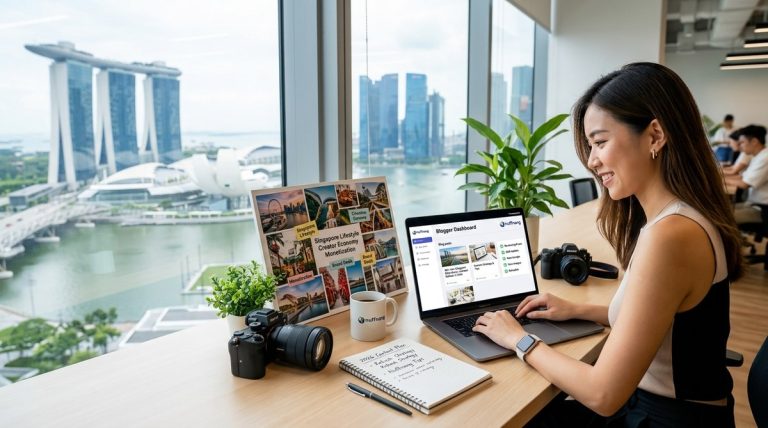
Your blog posts from 2023 are still sitting on page two of Google. Your 2024 guide to the best chicken rice in Singapore gets a trickle of visitors. You post a new article every week, yet your traffic graph looks like a flatline. You are not alone. Many Singapore bloggers see their hard work fade over time. Search algorithms shift. Reader habits change. What worked two years ago feels stale today. The good news is that you do not need to start from scratch. A focused content refresh can bring your best pages back to life.
A Singapore blog content refresh in 2026 is not just about fixing typos. It means updating old posts with current local data, improving SEO for new search behaviours like AI overviews, and aligning with what your audience cares about today. This guide gives you a step-by-step process to revive your archive and attract fresh readers.
Why a content refresh matters more in 2026
Google now prioritises fresh, authoritative content. If your article about Singapore hawker closures still references 2022, it looks outdated. AI search tools and featured snippets pull from pages that show clear timeliness. A refresh signals to search engines that your blog is active and trustworthy.
Beyond algorithms, your readers have changed. The savvy Singaporean who reads your blog today wants hyperlocal, current information. They want to know which cafes have reopened after renovations. They want updated MRT line changes. They want to know how GST changes affect their favourite online stores. Old content that does not reflect the current reality will lose their trust.
The real cost of ignoring old posts
Let us look at the numbers. A blog with 200 articles might have 20 percent of its pages generating 80 percent of its traffic. The other 160 posts sit idle. Every month they do not rank, you lose potential ad revenue, affiliate commissions, and brand partnership opportunities. Updating just one old post can boost its organic traffic by over 100 percent. That is free traffic you are leaving on the table.
Spotting which posts to refresh first
Not every old post deserves a refresh. Focus on the ones with the highest potential return. Here is how to identify them:
- Posts that once ranked on page one but slipped to page two or three.
- Articles with strong backlinks but outdated information.
- Pages with high click-through rates but high bounce rates (readers leave because the content is old).
- Evergreen topics that need a yearly update, like budget guides or festival dates.
- Content that targets keywords you see your competitors ranking for.
Use Google Search Console to find pages that lost impressions. Tools like Ahrefs or SEMrush can show you which keywords you are barely hanging onto. Those are your low-hanging fruit.
Your 5-step Singapore blog content refresh process
Follow this sequence for each post you decide to update.
-
Audit the current performance. Check the page’s current ranking, traffic, and bounce rate. Note the keyword it targets. See if search intent has changed. For example, a post about “best durian stalls in Singapore” from 2023 might now need to include delivery options and pricing updates.
-
Update all factual information. Change dates, prices, names, and locations. If your guide to Sentosa attractions still lists the old admission fees, fix them. Add new developments like the 2026 opening of the new cycling path or a recent hawker closure. Remove anything that no longer exists.
-
Improve readability and structure. Break long paragraphs into shorter ones. Add subheadings. Use bullet points for lists. Singapore readers scan content fast. Make it easy for them to find the answer. Add a table of contents at the top for long posts.
-
Add new media. Replace old photos with current ones. If you wrote about the best bubble tea in 2022, take new pictures of the drinks in 2026. Add a short video clip of a tea shop. Visual freshness signals relevance.
-
Optimise for 2026 search behaviour. Include a section that answers common questions directly. This helps you appear in AI overviews and voice search results. Update your internal links to point to newer, relevant posts on your blog.
Common mistakes Singapore bloggers make during a refresh
Avoid these pitfalls that can undo your hard work.
| Mistake | Why it hurts | What to do instead |
|---|---|---|
| Changing the URL | Breaks existing backlinks and confuses search engines | Keep the same URL. Only update the content. |
| Removing old comments | Deletes social proof and engagement signals | Keep comments. Add a note at the top saying the post has been updated. |
| Keyword stuffing | Makes content read unnaturally and triggers penalties | Use keywords naturally. Focus on answering the reader’s question. |
| Ignoring mobile formatting | Many Singaporeans read on phones during their commute | Check how the post looks on a mobile screen. Adjust image sizes and font. |
| Forgetting to update the date | Readers see an old date and leave immediately | Change the published date to the refresh date. Add a line like “Updated January 2026”. |
Adding local flavour that resonates
Singapore readers connect with content that feels like it belongs here. When you refresh a post, weave in local references. Mention specific neighbourhoods like Tiong Bahru or Joo Chiat. Talk about recent events like the 2026 Singapore Airshow or the latest changes to the COE system. Use local terms like “chope” or “lepak” where appropriate. Share anecdotes about your own experience at a new cafe in Katong. This authenticity builds trust and keeps readers coming back.
“A refreshed post that sounds like it was written by a friend who actually lives in Singapore will always outperform generic, updated content.” – Nuffnang editorial team
How to repurpose refreshed content for more reach
A refreshed blog post does not have to live only on your site. Use it to fuel your social media and newsletter.
- Share a carousel on Instagram with the top five updates from the post.
- Record a short TikTok or Reel showing the before and after of your refresh process.
- Send a dedicated email to your subscribers with a link to the updated article.
- Create a Twitter thread with the key statistics you updated.
- Pin the updated post to the top of your blog’s homepage for a week.
This approach multiplies the value of your work. You get more eyes on the same piece of content without writing something new.
Measuring the success of your refresh
Do not just update and forget. Track your results after four to six weeks.
- Check if the page’s ranking improved for its target keyword.
- Monitor organic traffic to the page using Google Analytics.
- Look at the bounce rate. Did it drop? That means readers found what they needed.
- See if the page generates new backlinks or social shares.
If you see positive movement, apply the same process to your next candidate. If not, revisit the post. Maybe the keyword is too competitive, or the content still misses the mark.
When to rewrite instead of refresh
Sometimes a post is beyond saving. If the topic is no longer relevant, the keyword has zero search volume, or the content is too thin, consider a full rewrite. You can redirect the old URL to a new, more comprehensive post. This preserves any existing link equity while giving readers something valuable.
A sample refresh checklist for your next post
Print this list and use it for every update.
- [ ] Check current ranking and traffic.
- [ ] Update all dates, prices, and names.
- [ ] Add new local examples from 2026.
- [ ] Improve headings and paragraph breaks.
- [ ] Replace or add new images.
- [ ] Add a FAQ section for voice search.
- [ ] Update internal links.
- [ ] Check mobile formatting.
- [ ] Change the published date.
- [ ] Share the update on social media.
Your blog deserves a second chance
You have already done the hard part. You wrote the content. You built the audience. Now give those old posts the care they need to perform in 2026. A Singapore blog content refresh is one of the smartest investments you can make for your traffic and income. Start with one post this week. Pick a favourite that has lost steam. Run it through the five-step process. Watch how a little attention can bring it back to life. Your readers and your search rankings will thank you.
About the Author