Most lifestyle and niche bloggers in Singapore treat LinkedIn as a boring corporate space, something they only update when they change jobs. That view is costing you money. In 2026, brands are actively looking for creators who can speak with authority, show real expertise, and connect with a professional audience. Your blog content already proves you know your niche. LinkedIn is where you turn that knowledge into paid partnerships.
Singapore bloggers can use LinkedIn to land brand deals by positioning themselves as niche experts instead of general influencers. Brands in 2026 value consistency, thought leadership, and authentic storytelling over follower count. By optimising your profile, sharing valuable insights, and pitching strategically, you can attract partnerships that pay better and last longer.
Why LinkedIn Matters More for Bloggers in 2026
Brands in Singapore are shifting their budgets. They still work with Instagrammers and TikTokers, but they also want creators who can speak to decision makers. A beauty blogger who posts about skincare ingredients can attract a local skincare brand’s marketing team. A finance blogger who shares budgeting tips can catch the eye of a bank or an insurtech startup. LinkedIn gives you direct access to the people who approve sponsorship budgets.
The platform also rewards consistency. You do not need a huge following. You need a clear niche and a steady stream of posts that show you know your stuff. When a brand manager sees your name appear in their feed every week with smart commentary, they start to see you as a partner, not just another creator.
How to Position Your LinkedIn Profile for Brand Deals
Your profile is your storefront. If it looks like a standard job seeker profile, brands will scroll past. You need to signal that you are a creator open to collaborations.
Optimise Your Headline and About Section
Do not just list your job title. Use your headline to state your niche and your value. For example, instead of “Freelance Writer”, try “Singapore Food Blogger | Helping local restaurants tell better stories through video and reviews”. In your About section, mention that you work with brands. Share a few highlights from past collaborations. Include a link to your media kit or blog.
Add a Featured Section with Your Best Work
LinkedIn lets you pin posts, articles, and links to the top of your profile. Use this space to showcase your best sponsored content. If you worked with a local brand like Love, Bonito or a homegrown snack company, feature that post. It shows social proof immediately.
Turn on Creator Mode
LinkedIn has a Creator Mode toggle in your profile settings. It adds a “Follow” button, makes it easier for brands to see your topics, and gives you access to analytics. Turn it on. It signals that you are here to create, not just to network.
Five Unexpected Ways to Land LinkedIn Brand Deals
Here are practical methods that work for Singapore bloggers in 2026. These are not theoretical. They are based on what is working right now in the local creator economy.
1. Publish Thought Leadership Posts, Not Just Promos
Brands do not want you to shout about their products immediately. They want you to demonstrate expertise first. Write posts that share insights from your niche. If you run a travel blog, write about the hidden costs of booking flights through third-party sites. If you review gadgets, share your thoughts on why certain tech features matter for everyday users.
These posts build authority. When a brand sees that you can educate an audience, they trust you to represent their product. After a few weeks of consistent posting, start mentioning brands naturally. For example, “I have been testing the latest noise-cancelling earbuds from [Brand] and here is what surprised me about the battery life.” That type of post feels authentic and gets noticed.
2. Engage with Brand Employees and Marketing Teams
Do not wait for brands to find you. Go to them. Search for the marketing managers, brand leads, or founder of a Singapore company you want to work with. Follow their profiles. Comment on their posts with genuine observations, not generic praise.
For instance, if a local food brand posts about a new product launch, leave a comment that adds value. Say something like “This flavour profile reminds me of the pandan notes that are popular in Singapore. Have you tested it with local taste testers yet?” That shows you understand the market. It gets you on their radar.
3. Share Case Studies from Past Brand Work
After you complete a sponsored post for a brand, turn it into a LinkedIn case study. Write a short post explaining what the goal was, what you created, and what results you delivered. Include metrics like engagement rate, click-throughs, or sales if you have them.
Brands love seeing proof. A post that says “Helped [Brand] increase website traffic by 40% with a single blog post” is powerful. It also serves as a living portfolio. Every time a new brand visits your profile, they see exactly what you can do.
4. Create a Newsletter on LinkedIn
LinkedIn allows you to send a newsletter to your followers. This is an underused feature. Start a weekly or bi-weekly newsletter that shares tips, trends, or behind-the-scenes stories from your blogging journey. Promote it in your posts.
A newsletter gives brands another reason to partner with you. They can sponsor an edition or include their product in a roundup. It also deepens your relationship with your audience, which makes your endorsement more valuable.
5. Pitch Brands Directly via InMail
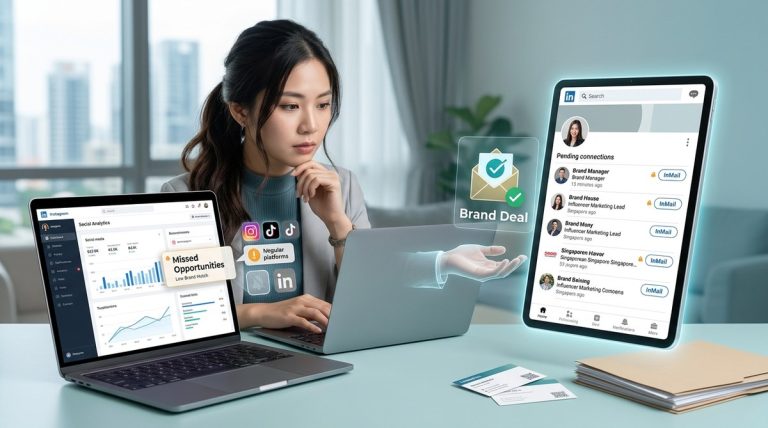
Do not be shy. If you see a brand that fits your niche, send a polite InMail. Keep it short. Introduce yourself, mention why you like their brand, and suggest one specific collaboration idea. Attach a link to your blog or media kit.
The key is specificity. Do not say “I would love to work with you.” Say “I think a blog post comparing your new skincare line with other popular options in Singapore would resonate with my audience. I have a 5% engagement rate on beauty content.” That shows you have thought it through.
What to Avoid When Pitching on LinkedIn
Some mistakes can kill your chances before you even start. Here is a table of common pitfalls and how to fix them.
| Mistake | Why It Hurts | Better Approach |
|---|---|---|
| Sending a generic connection request | Looks spammy. Brand managers ignore it. | Personalise the request. Mention one thing you like about their work. |
| Posting only about yourself | Brands want value, not self-promotion. | Share insights, tips, and lessons. Keep the ratio 80% value, 20% promotion. |
| Ignoring comments on your posts | Low engagement signals low influence. | Reply to every comment within 24 hours. Start conversations. |
| Using a corporate, stiff tone | Feels like a robot. Singapore brands want authentic voices. | Write the way you speak. Use local references and casual language. |
| Asking for free products immediately | Comes across as entitled. | Build rapport first. Offer value before asking for anything. |
A Simple Process to Land Your First LinkedIn Brand Deal
Follow these steps over the next 30 days. Adjust based on your niche.
- Audit your profile. Update your headline, About section, and featured posts. Turn on Creator Mode.
- Identify 10 target brands in Singapore that align with your blog niche. Look for brands that already work with creators.
- Follow and engage with at least one person from each brand’s marketing team. Comment on their posts with thoughtful insights.
- Publish three posts per week for two weeks. Focus on sharing knowledge, not selling.
- Send five personalised InMails to brand managers. Include a specific collaboration idea and a link to your best work.
- Track your results. Note which brands respond and what type of content gets the most attention.
Expert advice: “The best brand deals come from relationships, not cold pitches. Spend the first month just adding value to your niche’s conversation on LinkedIn. By the time you pitch, the brand already knows who you are.” This approach works especially well in Singapore, where the creator community is still small enough that genuine connections stand out.
Building Long-Term Partnerships Through LinkedIn
A single sponsored post is nice. A recurring partnership is better. LinkedIn helps you build the kind of trust that leads to retainer deals. When you consistently show up as a reliable voice, brands start to see you as a long-term asset.
Share updates about your ongoing collaborations. Tag the brand. Thank them publicly. This reinforces the relationship and makes them look good to their own stakeholders. It also encourages other brands to reach out.
For more ideas on how to grow your income as a creator, check out our guide on maximising your Singapore blog income through strategic content planning. It covers how to align your content calendar with brand goals.
Your Next Move for LinkedIn Brand Deals
Start today. Pick one of the five methods above and commit to it for the next week. If you are new to LinkedIn, just focus on optimising your profile and publishing two thoughtful posts. The platform rewards consistency, not perfection.
Singapore brands are hungry for creators who can speak with authority and connect with a professional audience. Your blog already proves you have the knowledge. LinkedIn is where you package that knowledge into a brand-friendly asset. The only thing missing is your first post.
If you want a deeper look at how to structure your pitch, read our guide on how to write a brand pitch that Singapore companies actually read. It will help you turn those InMails into paid conversations.
The opportunity is there. Go grab it.
About the Author