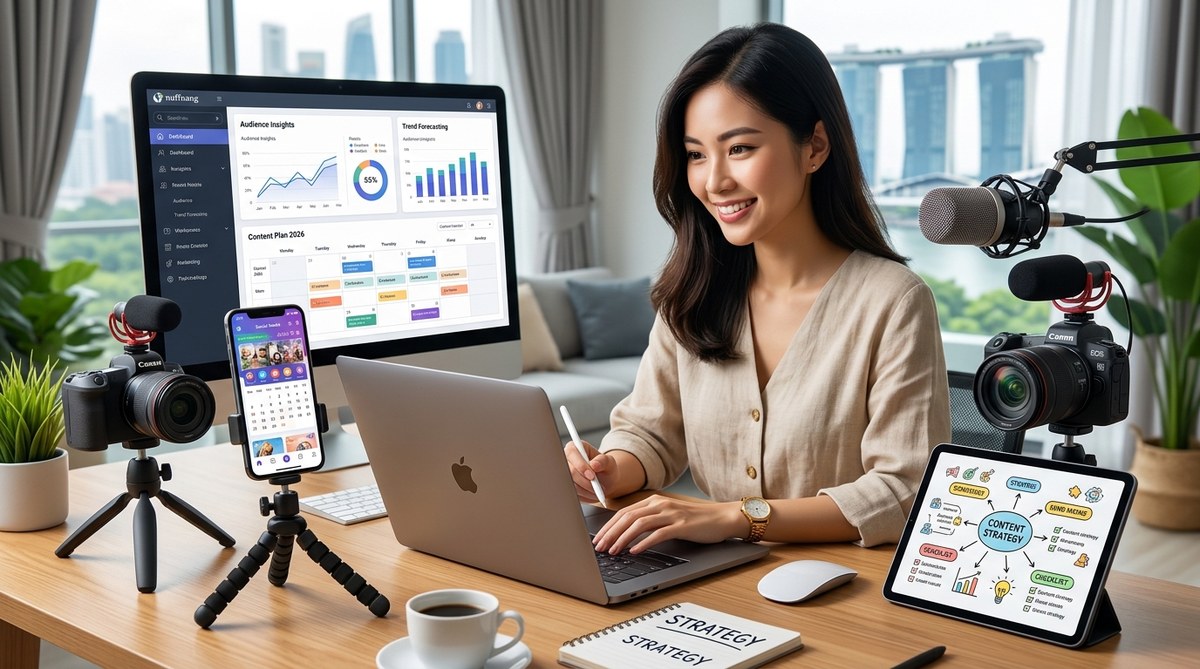
Being a blogger in Singapore means juggling a day job, hawker centre reviews, or maybe a weekend side hustle while the MRT keeps running. Time is never enough. In 2026, the right tools can cut your content creation time by half, letting you focus on what actually matters — connecting with your audience and earning from your passion. Here are the must-have tools that work for real Singapore bloggers, tested under our tropical heat and tight deadlines.
In 2026, Singapore bloggers need tools that save time without sacrificing quality. From AI-powered writing assistants to local SEO planners, this guide covers essential software for content creation, scheduling, and monetisation. Whether you review hawker food or cover travel, these tools help you publish consistently and earn more. Boost productivity and stay ahead.
Why Your Tool Stack Needs a 2026 Upgrade
The creator economy in Singapore has matured. Brands now expect polished, regular content from local bloggers. Meanwhile, your competition includes influencers who treat blogging like a full-time job. The tools you used in 2023 won’t cut it anymore. You need automation, local context, and features that understand Singlish, GST, and our unique public holidays.
Let’s walk through the categories that matter most.
AI Writing Assistants Tailored for Singapore
AI writing tools have grown up. In 2026, the best ones understand local slang and can adapt to our mixed English and Mandarin style. They also respect the banned word list you might have for your brand voice.
- Jasper – Still strong for long-form blog posts. Its new Singapore-specific template helps you write about events like the Great Singapore Sale or National Day Parade naturally.
- ChatGPT with custom instructions – You can feed it your past 10 posts and ask it to mimic your tone. Many Singapore bloggers use this for drafting captions about kopitiam food reviews.
- Copy.ai – Great for social snippets and ad copy. It now includes a “Singapore English” mode that avoids overly formal phrases.
When choosing an AI assistant, look for one that lets you save custom brand guidelines. That way your “bojio” or “shiok” style stays consistent.
“I used to spend 3 hours writing a single blog post. Now with an AI draft and my own editing, I finish in 45 minutes. That gives me time to shoot better photos at the next hawker opening.” – Amanda L., Singapore lifestyle blogger
Visual Content Tools That Respect Your Time
Singapore bloggers are visual storytellers. Whether you shoot food flat lays or fashion OOTDs, editing takes forever. Here are the tools that save you the most time.
| Tool | Best For | Price (SGD/month) | Local Feature |
|---|---|---|---|
| Canva Pro | Ready-made local templates | $17 | Includes “Singapore Festivals” template set |
| Adobe Express | Video + image combo | $10 | Auto-resize for Instagram, Facebook, TikTok |
| Photopea | Advanced editing without subscription | Free | Works in browser, supports PNG/PSD |
| CapCut | Short video editing | Free | Local trending music library for SG |
A simple rule: if you do more than 10 posts a month, invest in a paid plan. The time saved on resizing thumbnails alone is worth it.
Scheduling Tools That Handle Time Zones
Your audience in Singapore is most active between 8pm and 10pm on weekdays, and Saturday afternoons. But you might be asleep or at work then. Scheduling tools let you post when you are not online.
- Buffer – Clean interface, supports Instagram Stories and Reels. Good for solo bloggers.
- Hootsuite – Better for managing multiple accounts (e.g., your blog, a client’s brand, and your personal page).
- Later – Visual drag-and-drop calendar. Best for planners who like to see the grid.
Set your schedule based on local peak hours. Use the “best time to post” feature in these tools, but always cross-check with your own analytics. What works for a US audience will not work for ours.
SEO and Analytics Tools for Local Traffic
Ranking on Google in Singapore means using the right keywords. General tools like Ahrefs and SEMrush are still kings, but they now have dedicated “Singapore market” filters. You can see what terms people search in the heartlands versus the CBD.
- Ahrefs – Site audit feature finds broken links fast. Use it before a brand partnership to clean your blog.
- Google Search Console – Free and mandatory. Check which queries bring Singapore traffic.
- SE Ranking – A cheaper alternative for one-person teams. Includes local rank tracking for Singapore.
A common mistake is targeting “bak kut teh recipe” instead of “best bak kut teh Singapore 2026”. The second phrase has higher intent and less competition. Use these tools to find those gold mines.
Monetisation Platforms That Actually Pay
You need tools that help you earn. Beyond ads, consider platforms that connect you with local brands directly.
- Nuffnang Singapore – The go-to for local brand deals. They understand the Singapore market and offer campaigns that suit your niche. Check out their guide on https://nuffnang.com.sg/maximise-your-singapore-blog-income-through-strategic-content-planning/ to build a revenue plan around sponsored content.
- ShopBack – Not just for shopping. Their affiliate programme lets you earn commissions by reviewing products you already buy.
- Unaffiliated but note: Consider joining a local influencer network like Gush or Brandsnob for micro-influencer campaigns.
Monetisation is not just about getting paid. It is about getting paid consistently. Use tools that track your earnings per post so you know which content types bring the highest CPM.
A Three-Step Process to Pick Your Tools
Choosing the best tools for Singapore bloggers in 2026 does not need to be overwhelming. Follow this process:
-
Audit your biggest time wasters. For one week, log every task you do related to content. Mark how long each takes. You will likely find that writing, editing photos, and scheduling eat up 80% of your time. Focus your tool search on these areas first.
-
Test one tool per category. Do not sign up for five tools at once. Pick one writing assistant, one scheduling tool, and one SEO platform. Use them for two weeks. Measure your output before and after.
-
Ask for local recommendations. Join the Singapore Bloggers Facebook group or Telegram chats. Ask what other creators in your niche use. A tool that works for a travel blogger may not suit a food blogger.
Mistakes to Avoid When Adopting New Tools
Many Singapore bloggers waste money on tools they never use. Here is a table of common pitfalls.
| Mistake | Why It Happens | How to Avoid |
|---|---|---|
| Signing up for yearly plans | The 12-month discount feels like a steal. | Start with monthly plans. Upgrade only after 3 months of steady use. |
| Using too many niche tools | Each tool promises a small advantage. | Stick to generalist tools that cover multiple functions (e.g., Canva does images and video). |
| Ignoring free versions | Paid tools seem more professional. | The free tiers of Buffer and Later allow up to 30 posts each. Use them until you hit limits. |
| Not checking local compatibility | Some tools block Singapore from certain features (e.g., some AI tools lack local language support). | Read reviews from other Singapore users before buying. |
If you already committed to a tool that does not work, cancel and move on. Do not force it because of a sunk cost.
Bringing Local Trends into Your Tool Workflow
In 2026, the most successful Singapore bloggers use trends to guide their content. Your tools can help you spot those trends early.
- Use Google Trends (set to Singapore) weekly. Look for rising keywords like “pop-up pasar malam” or “Singapore art week”.
- Set up a Google Alert for “Singapore blogger collaboration” or “sponsored post Singapore”.
- Use the trending topics feature in your scheduling tool (Later has one) to see what is buzzing in Singapore Instagram Reels.
For example, during the 2026 Chinese New Year, bloggers who posted “baking pineapple tarts behind the scenes” got higher engagement. Tools like CapCut allowed them to edit those mini vlogs in under 10 minutes.
How Automation Helps You Network with Brands
You cannot pitch brands every day. That is where automated email sequences come in. A simple tool like MailerLite (free up to 1000 subscribers) lets you send a monthly newsletter to brand managers. Include your latest work and a short pitch.
Better yet, combine your content calendar with your outreach calendar. Use a project management tool like Notion or Trello to track which brands you contacted, when, and the follow-up date. Many Singapore influencers miss opportunities simply because they forgot to reply to a brand’s Instagram DM. Automate reminders for that.
For deeper brand relationship building, read our guide on
The Future of Blogging Tools (What’s Next in 2027)
The tools landscape changes fast. By early 2027, expect:
- AI that can generate full video scripts from a blog post with one click.
- Scheduling tools that auto-post to TikTok based on trending sounds in Singapore.
- SEO tools that predict search volume for local events before they are announced.
Stay flexible. The best tool today may be obsolete next year. But the principles remain: save time, stay local, and measure what works.
Your Next Step: Try One Tool Today
Pick the category where you suffer most. Is it writing? Sign up for a free Jasper trial today. Is it scheduling? Set up your Buffer account and plan the next 7 posts. Is it SEO? Run a free Ahrefs site audit.
Even if you only try one tool from this list, you will free up hours every week. Use that extra time to pitch a brand partnership or shoot better photos at the next hawker launch. The best tools for Singapore bloggers in 2026 are the ones you actually use.
If you want more tailored advice, check out our post on https://nuffnang.com.sg/effective-strategies-for-growing-your-singapore-based-content-audience/ for audience growth strategies that pair with these tools.
Happy blogging, and remember: your content is your asset. Treat your tools as investments, not expenses.
About the Author