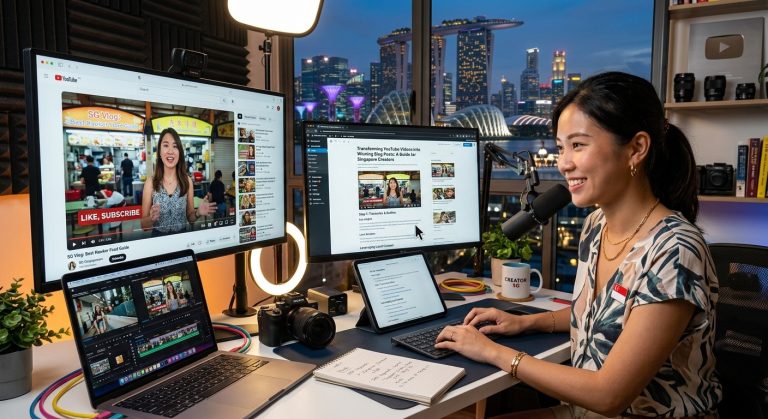
You are running a Singapore blog. You film, edit, write, and post consistently. But the gear costs, the software subscriptions pile up, and time is money. What if the Singapore government could help fund your next content push?
It is not a rumour. Several government grants and schemes in Singapore are designed to support content creators, freelancers, and small media businesses. The key is knowing which ones fit your work and how to apply without wasting time. This guide walks you through the most relevant options for 2026.
Singapore bloggers in 2026 can apply for grants like the SG Digital Scholarship, Enterprise Development Grant (EDG), and SkillsFuture Credit to fund content equipment, training, and business growth. Each scheme has specific eligibility rules. Success depends on showing clear project goals, local audience impact, and proper documentation. Start with SkillsFuture for individual learning, then move to EDG if you run a registered business. Always check the latest criteria before applying.
Start with the Grant That Fits Your Stage
Not every grant suits every blogger. Your first step is to match your current setup with the right scheme. Here is a breakdown of the main options for 2026.
SkillsFuture Credit (For Individual Creators)
If you are a Singaporean aged 25 and above, you already have access to SkillsFuture Credit. The government tops up your account periodically. In 2026, the base credit stands at SGD 500, with additional top ups announced during the Budget.
You can use this credit to pay for courses that sharpen your content skills. Think video editing, SEO writing, photography, or social media marketing. Many approved course providers in Singapore list their programmes on the SkillsFuture portal.
How to use it:
1. Log in to the SkillsFuture Credit account with your Singpass.
2. Search for courses under categories like “Media and Communications” or “Digital Media”.
3. Enrol directly through the portal. The credit covers the full or partial course fee.
4. Attend the course and submit any required feedback.
This grant is the easiest to access. No lengthy proposals. No waiting months for approval. You simply choose a course and apply the credit at checkout.
Enterprise Development Grant (For Registered Businesses)
If your blog has grown into a registered business (sole proprietorship or private limited), the Enterprise Development Grant (EDG) is a stronger fit. EDG supports projects that help you upgrade your business capabilities. For a blogger, this could mean building a better website, automating content workflows, or hiring a video editor.
EDG covers up to 70% of qualifying project costs for Singapore SMEs. The grant is structured around three pillars: Core Capabilities, Innovation and Productivity, and Market Access.
For content creators, the most relevant pillar is Core Capabilities. You can apply for funding to:
– Develop a content management system.
– Implement analytics tools to track audience behaviour.
– Train your team in advanced production techniques.
The application process requires a detailed project plan. You need to submit through the Business Grants Portal. Expect a wait time of 8 to 12 weeks for approval.
SG Digital Scholarship (For Deep Skills Development)
The SG Digital Scholarship is for individuals who want to build deep expertise in tech and digital media. It is more competitive. It covers full tuition fees for selected diploma, undergraduate, and postgraduate programmes.
If you are a serious content creator aiming to master data analytics, AI driven content tools, or immersive media production, this scholarship can fund your entire education. In return, you commit to working in Singapore for a period after graduation.
This is not a grant for buying a camera. It is a long term investment in your skills. Apply through the Infocomm Media Development Authority (IMDA) portal.
How to Apply for Government Grants as a Blogger
The application process varies by scheme. But a few universal steps will improve your chances.
Step 1: Define Your Project Clearly
Government officers review hundreds of applications. Yours must stand out. Write a one page summary that answers:
– What specific content project are you funding?
– How does it benefit your Singapore audience?
– What measurable outcomes will you achieve?
For example, do not write “I want to buy a new microphone.” Write “I will produce a 12 episode podcast series featuring local hawker stories, aiming for 10,000 downloads in six months.”
Step 2: Gather Your Documents
Each grant requires different paperwork. Prepare these in advance:
– NRIC or business registration certificate.
– Latest tax assessment or financial statements.
– Quotations from suppliers or trainers.
– A timeline with milestones.
Step 3: Submit Through the Correct Portal
- SkillsFuture: Use the SkillsFuture Credit portal.
- EDG: Use the Business Grants Portal (requires CorpPass).
- SG Digital Scholarship: Use the IMDA application portal.
Double check the submission window. Some grants open only during specific periods.
Common Mistakes Singapore Bloggers Make When Applying
Avoid these pitfalls. They cause most rejections.
| Mistake | Why It Happens | How to Fix It |
|---|---|---|
| Vague project description | You assume the reviewer knows your niche. | Be specific. Name the content format, platform, and target audience. |
| Missing supporting documents | You submit the application in a hurry. | Use a checklist. Tick off each required file before uploading. |
| Applying for the wrong grant | You pick a grant meant for manufacturers or tech startups. | Read the eligibility criteria carefully. If your blog is not a registered business, do not apply for EDG. |
| Ignoring the co funding requirement | You expect 100% funding. | Budget your own contribution. Most grants cover 50% to 70%. |
| No clear measurement plan | You cannot show how the grant helped. | Define KPIs like follower growth, engagement rate, or revenue increase. |
“The most successful grant applications treat the funding as a partnership. Show the government that their money will create tangible value for the local content ecosystem.” – Media industry consultant, Singapore
Beyond Grants: Other Schemes That Support Content Creators
Grants are not the only way. Several schemes offer indirect support.
The Public Service Media (PSM) Fund
The PSM Fund supports content that serves Singapore’s public interest. If your blog covers community topics, heritage, or social issues, you may qualify for production funding. Applications are evaluated quarterly.
National Arts Council (NAC) Grants
If your content falls under arts and culture (think reviews of local theatre, interviews with visual artists, or coverage of heritage festivals), NAC offers project grants. These range from SGD 5,000 to SGD 50,000.
IMDA’s Content Innovation Programme
This programme funds experimental content formats. If you want to produce interactive web series, AR enhanced travel guides, or AI generated local news summaries, IMDA may co fund your project.
How to Strengthen Your Application in 2026
The competition for grants is growing. Here are three strategies to stand out.
Build a Track Record First
Grants are easier to get when you have existing content. Publish at least 20 blog posts or 10 videos before applying. Show that you have an audience. A small but engaged following is better than no following.
Align Your Project with National Priorities
Singapore’s government focuses on digitalisation, sustainability, and social cohesion. Frame your content project around one of these themes. A blog series about zero waste living in HDB estates ticks both sustainability and local relevance.
Get Professional Help if Needed
If your application is complex, consider hiring a grant consultant. They charge a fee but can improve your success rate. Look for consultants who specialise in media and creative industries.
Your Action Plan for 2026
Here is a numbered list to get you started today.
- Check your SkillsFuture Credit balance. Log in with Singpass and see how much you have.
- Enrol in one content related course. Use the credit to pay for it.
- Register your blog as a business. If you earn consistently, sole proprietorship is a simple start.
- Draft a one page project proposal. Focus on a specific content project with clear outcomes.
- Apply for the EDG if your business is registered. Submit through the Business Grants Portal.
- Bookmark the IMDA and NAC grant pages. Check them monthly for new calls.
- Track your results. Keep a spreadsheet of applications, approvals, and outcomes.
Making the Most of Available Support
Grants and schemes are tools. They work best when you already have a clear direction. Use them to accelerate what you are already building, not to start something you do not care about.
The Singapore government wants to see a vibrant local content scene. Your blog, your videos, and your podcasts are part of that. When you apply for funding, you are not just asking for money. You are showing that you believe in the value of Singapore stories.
Start small. Use your SkillsFuture Credit this month. Then plan for a bigger grant next quarter. Every application teaches you something. Even a rejection gives you feedback to improve your next proposal.
Your content matters. The funding is there. Go get it.
About the Author