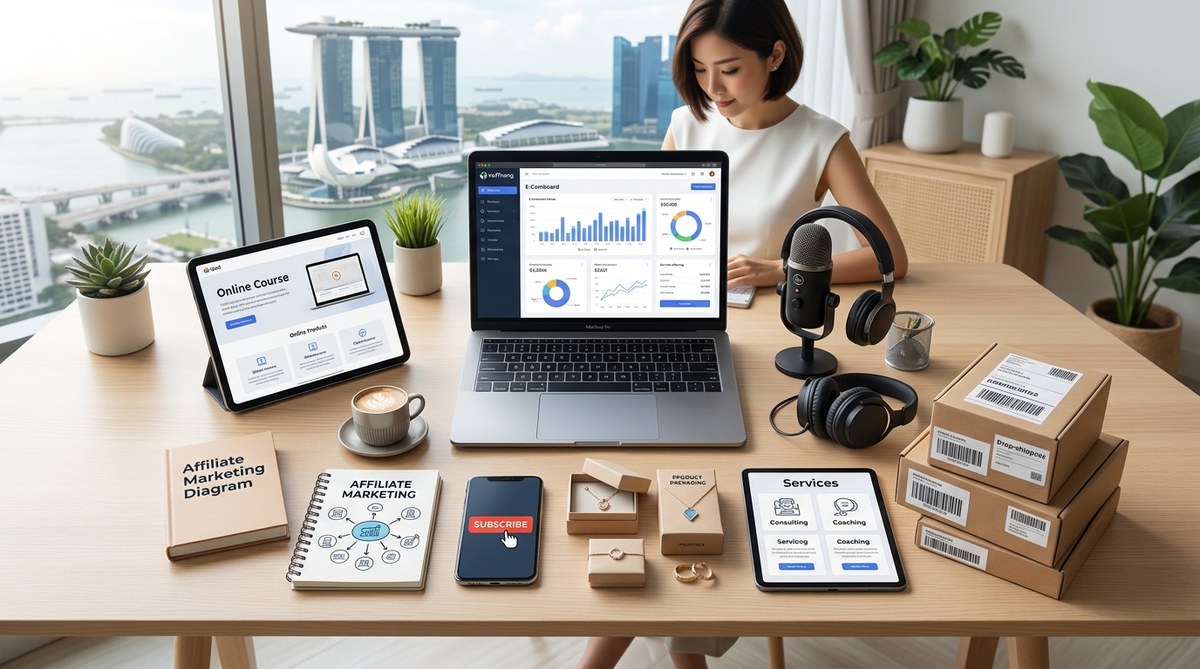
Your blog is not just a hobby anymore. You have built an audience who trusts your recommendations on where to eat in Tiong Bahru, which skincare works in humid weather, or how to budget for a BTO. Sponsored posts have been the default way to earn, but relying only on brand deals leaves your income tied to someone else’s marketing calendar. The good news is that Singapore’s creator economy in 2026 is mature enough to support multiple income streams. You can earn from your content without waiting for the next brand pitch.
Diversifying your blog income is essential for long term stability. Beyond sponsored posts, you can use affiliate marketing, digital products, paid memberships, services, display ads, online courses, and community building. Each method works best for different niches and audience sizes. Start with one stream, test it, then add more. Your Singapore audience has specific needs like local shopping platforms, practical guides, and events. Focus on what they already trust you for.
Why Relying Only on Sponsored Posts Is Risky
Sponsored content pays well when brands have budget. But their budgets shrink during economic downturns or advertising seasonal dips. In Singapore, many bloggers saw this during 2023 and 2024 when some brands paused campaigns. If you have only one income source, a slow month means zero earnings. Moreover, sponsored posts require you to follow the brand’s brief, not your creative vision. You deserve to own your revenue channels.
Beyond income stability, diversification helps you build an asset. A blog with multiple monetisation streams is more valuable if you ever want to sell it or pass it on. Local buyers in Singapore look for blogs that do not depend on a single advertiser.
7 Proven Monetization Strategies for Singapore Bloggers
Here are the methods that work well for the local audience. I have ranked them by how easy they are to start.
1. Affiliate Marketing with Local Platforms
Affiliate marketing pays you a commission when someone buys through your link. In Singapore, the most used affiliate networks are Shopee, Lazada, Great Deals, Klook, and Agoda. You do not need massive traffic to start. Write a review of your favourite home appliance from Gain City, or a guide to the cheapest flights from Changi. Link to the product. When your readers buy, you earn.
To succeed, choose products you genuinely use. Your audience can tell if you are only recommending for the commission. Share honest pros and cons. Link within your content naturally. Do not stuff links at the bottom.
2. Digital Products That Solve Singapore Problems
You can create digital products once and sell them many times. Examples include:
- Budgeting spreadsheets for BTO renovations
- Meal prep ebooks for busy professionals in Singapore
- Photography presets for local landscapes (Gardens by the Bay, Marina Bay)
- Templates for writing job applications in Singapore
Digital products give you high margins. Host them on Gumroad or your own site. Promote them to your email list or through Instagram.
3. Paid Memberships or Newsletters
Platforms like Substack, Patreon, or Ghost allow you to charge a monthly fee for exclusive content. Singapore’s audience values insider knowledge. You can offer:
- Behind the scenes of your blog journey
- Early access to reviews or guides
- A private Telegram group for discussions
Start with a free tier to build trust. Then introduce a paid tier for the most dedicated readers. Many local food bloggers now run paid newsletter loops that share unlisted restaurant recommendations.
4. Freelance Services and Consulting
Your blog expertise is a skill. Offer services like:
- Content writing for other brands
- Social media strategy for small businesses
- Photography or videography for events
Service income is not passive, but it pays well and builds your network. You can even coach other bloggers in your niche. For example, a travel blogger can offer one on one sessions to help new creators plan itineraries.
5. Display Advertising Networks
Display ads earn based on page views. In Singapore, popular networks include Mediavine, AdThrive, and Google AdSense. The catch is traffic requirements. Mediavine needs 50,000 sessions monthly. If you are not there yet, focus on growing your organic traffic first.
When you qualify, ads are truly passive. Place them on your site using a plugin. The revenue depends on your niche; finance and lifestyle blogs usually earn more.
6. Online Courses
Singaporeans are lifelong learners. Create a course around what you know best. Examples:
- “How to Start a Food Blog in Singapore (Legal, Photography, Marketing)”
- “Personal Finance for Young Singaporeans”
- “How to Use Canva for Small Business Marketing”
Host the course on Teachable, Thinkific, or your own site. Price it between $50 and $200. Bundle with a digital product for higher perceived value.
7. Building a Community for Brand Sponsorships
Brands are willing to sponsor not just your blog but your community. If you have an active Telegram group, WhatsApp broadcast, or email list, you can offer sponsored shout outs or collaborations. This works particularly well for local events, product launches, or lifestyle brands.
Nurture your community by responding to comments, hosting Q&A sessions, and sharing exclusive tips. When you pitch to brands, highlight your engagement metrics, not just follower count.
Comparison of Each Method
| Method | Effort to Start | Income Potential | Best For |
|---|---|---|---|
| Affiliate Marketing | Low | Medium to High | Product reviews, guides |
| Digital Products | Medium | High (scalable) | Niche expertise |
| Paid Memberships | Medium | Medium | Loyal fan base |
| Freelance Services | Low | High | Skill based creators |
| Display Ads | Low (once set) | Low to Medium | High traffic blogs |
| Online Courses | High | High | Teaching oriented creators |
| Community Sponsorship | Medium | Medium | Engaged audience |
Common Mistakes That Singapore Bloggers Make
Even experienced creators fall into these traps.
- Underpricing their digital products. Many set prices too low because they feel imposter syndrome. Charge what the value is worth.
- Neglecting SEO in favour of social media. Social algorithms change. Good SEO brings steady traffic from Google.
- Promoting products they do not use. Readers will call you out. Authenticity is your currency.
- Putting all efforts into one method. Diversification is the point. Do not start five at once, but after one is working, add another.
- Ignoring email lists. Email converts better than social media. Start building your list from day one.
“The biggest mistake I see Singapore bloggers make is treating monetisation as a side note. They write great content but never place a link to a product or a course. You have to ask for the sale. Your readers want to support you.”
— Verified blogger with 5 years in the local scene.
How to Start: A Step by Step Plan
If you are ready to move beyond sponsored posts, here is a simple process.
- Choose one method from the list above. Pick the one that matches your current audience size and your skill.
- Create the minimum viable offer. For affiliate marketing, that could be one review post. For digital products, a single template.
- Promote it to your existing audience. Use your blog, Instagram stories, and email list.
- Measure the results. Track clicks, sales, and feedback.
- Iterate. Improve based on what your audience says. Then consider adding a second stream.
Do not overcomplicate. One solid income stream is better than three half hearted attempts.
Nurturing Your Audience for Long Term Success
All these methods rely on trust. Readers will only buy from you if they believe you care. Keep publishing valuable content regularly. Engage with comments. Show up on social media without always selling. Share behind the scenes of your monetisation journey. When they see you are transparent, they will support your products.
To grow your audience in a targeted way, read our guide on You can also learn how to build partnerships that go beyond sponsored content by checking out For a broader strategy, see our article on
Your Next Move
You now have a toolkit to turn your blog into a stable business. Pick one method, start small, and stay consistent. The Singapore blog monetisation landscape in 2026 is full of opportunities for those who take action. Your loyal readers are ready to support you. Give them a way to do that beyond just reading. Begin today, and your future self will thank you.
About the Author