Singapore’s blog scene in 2026 is buzzing. More creators are online, competition for attention is real, and traditional ad revenue isn’t what it used to be. You probably already use display ads and affiliate links. You may even have regular sponsored posts. Yet, you sense there’s more potential – untapped angles that could turn your blog into a sustainable business.
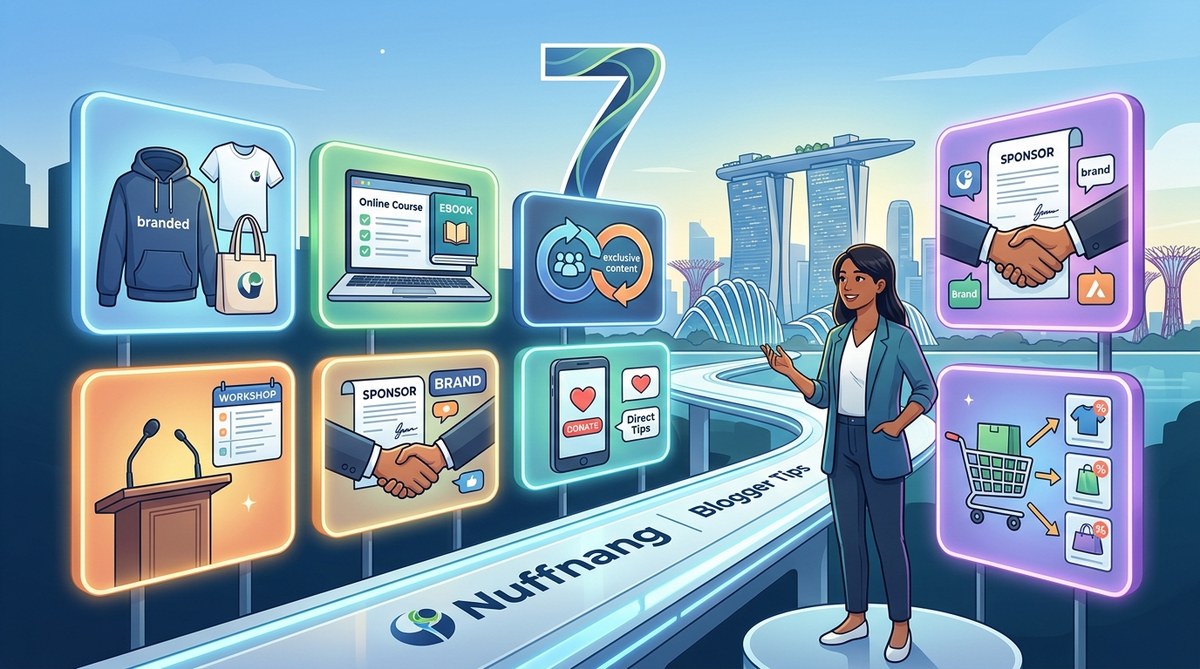
The key is to stop relying solely on one or two income streams. Instead, look at your blog as a platform for multiple revenue sources, each small but cumulative. The following methods are not hypothetical. They work right now for Singapore-based bloggers who have an engaged audience. They are also less crowded than the obvious routes. Let’s look at seven alternative ways to monetise your blog in 2026.
Singapore bloggers in 2026 need to move beyond advertising and basic sponsorships. The seven methods covered here – paid communities, localised digital products, content licensing, consulting, niche affiliate services, newsletter sponsorships, and video-first monetisation – offer scalable, recurring income. Each method is designed for the Singapore context, from hawker culture to CPF themes. Start with one, test, and layer the next.
Paid Membership Communities for Singapore Niches
A private community – on Discord, Circle, or even Telegram – can generate recurring monthly income. The trick is to make the community hyper-local.
Examples that work in Singapore:
- A food blog could run a closed Telegram group sharing exclusive table reservations at hard-to-book restaurants.
- A finance blog could offer a paid Slack channel with weekly Q&A on CPF strategies and Singapore tax tips.
- A parenting blog could host a private forum for swapping school exam materials and enrichment class reviews.
What members pay for is access to you and to each other. Price it affordably – $10 to $20 per month is typical for a Singapore audience. With 100 paying members, that’s $1,000 to $2,000 monthly recurring revenue. Not bad for a side income.
To start your own paid community, follow these steps:
- Choose one niche topic your readers already ask about (do not try to cover everything).
- Select a platform – Telegram (free, easy) or Circle (more features, paid plan).
- Set a clear value proposition, like “exclusive tips every Tuesday and direct Q&A every Friday”.
- Announce the community on your blog with a limited-time founding member discount (e.g., $10/month for the first 50 members).
- Deliver value consistently for the first 90 days. Build momentum so members stay.
This method works best if you already have a loyal, engaged audience. It is scalable and predictable.
Localised Digital Products That Actually Sell
Selling digital products is not new, but most Singapore bloggers make the mistake of copying generic templates. Instead, create digital products rooted in Singapore life.
| Digital product | Example topic | Potential audience |
|---|---|---|
| Spreadsheet template | Monthly budget planner with CPF contribution calculator | Finance blog readers |
| e-Guide | “Best Hawker Centres in the West: An Insider’s List” | Food blog readers |
| Checklist | “Pre-Primary 1 Registration Checklist for 2026” | Parenting blog readers |
| Printable | “Neighbourhood Walk Map: Tiong Bahru Hidden Gems” | Lifestyle blog readers |
Price each product between $5 and $15. Use Gumroad or Shopify to sell. Promote them in blog posts and in your email newsletter. Because the content is local, readers are far more willing to pay compared to generic solutions.
“I started selling a $12 Excel template for tracking HDB renovation costs. I got 50 sales in the first month – all from readers who found my renovation diary series on the blog. It’s now a passive income stream that brings in $500+ a month.”
– A Singapore interior design blogger
Content Licensing: Sell Your Articles to Brands
You write articles that are evergreen and relevant to Singapore audiences. Did you know brands and media outlets sometimes pay to republish them?
Content licensing means you grant a company permission to use your blog post (or an excerpt) on their own website, newsletter, or social media. It is not sponsored content – the brand pays for the content itself, not for your endorsement.
To get started:
- Identify 10 to 20 of your best-performing, non-sponsored posts.
- Reach out to complementary brands in your niche. For example, a travel blog can pitch a post about “5 Staycation Spots Under $300” to hotel booking platforms like Klook or Trip.com.
- Offer a license for a one-time fee, typically $100 to $500 per article depending on exclusivity and audience size.
This method works because brands need content but hate writing it. You already have the relevant material. You just need to package it as a licensing offer.
Consulting and Coaching for Aspiring Bloggers
As an intermediate to advanced blogger, you have expertise that beginners crave. Offer one-on-one consulting sessions or small group coaching.
You can charge:
- $50 for a 30-minute call on “How to grow your Singapore blog from 1,000 to 10,000 monthly visitors.”
- $200 for a two-hour workshop on “Monetising your food blog without annoying your readers.”
- $500 for a six-week coaching programme covering audience building, brand pitches, and content strategy.
To market your services, write a blog post titled “What I Learned From Monetising My Food Blog” and add a call-to-action for a free discovery call. Readers who already trust you will jump at the chance.
Internal link opportunity: Strategies for Growing Your Singapore-Based Content Audience will complement this method.
Niche Affiliate Programmes Beyond Amazon
Most bloggers join Amazon Associates. That is fine, but for a Singapore audience, local affiliate programmes often convert better and pay higher commissions.
Consider these niche programmes:
- ShopBack: Earn commission when readers sign up and shop through the app. Many Singaporeans use ShopBack for everything from groceries to flights.
- Fave: Similar for dining deals and local experiences.
- Insurance comparison sites like SingSaver or MoneySmart – they offer fixed payouts per lead, not just per sale.
- Local course platforms like SkillsFuture or General Assembly – promote relevant courses.
Create a dedicated list or guide around a problem. For example, “Top 5 Insurance Plans for Freelancers in Singapore” with affiliate links to SingSaver and MoneySmart. Because the content is highly specific, conversion rates can be 5–10%, compared to 1–2% for generic Amazon links.
Sponsored Newsletters (Not Sponsored Posts)
Your email newsletter is one of your most valuable assets. In 2026, brands are hungry for direct access to engaged audiences. Sponsored newsletter slots sell for a premium because open rates are high (20–40% in Singapore niches).
How to set it up:
- Grow your email list to at least 500 subscribers (you can do it faster by offering a freebie, like a “2026 Hawker Guide” PDF).
- Send a weekly or bi-weekly newsletter with a standard format (e.g., 3 links from your blog + 1 personal note).
- Offer a “sponsored slot” in your newsletter for a fixed fee – typically $100–$500 per send depending on your list size.
- Use platforms like ConvertKit or Mailchimp to manage sponsorships.
Don’t oversell. Keep sponsored slots to once every four issues to maintain trust. When you pitch a brand, show them your recent open rates and click-through rates. That data matters more than page views.
Internal link reference: Top Tips for Singapore Bloggers to Boost Engagement with Local Brands provides more brand pitch advice.
Video-First Monetisation: YouTube and TikTok Shop
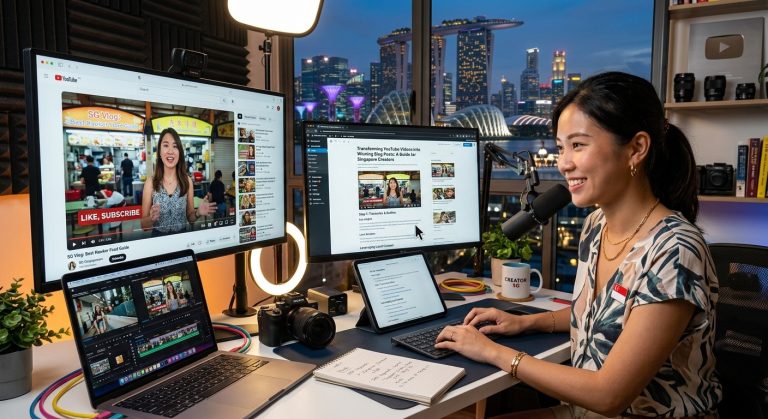
You do not have to be a full-time YouTuber to monetise your blog via video. Use your blog content as raw material for short videos.
Steps to start:
- Take one blog post and create a 60-second TikTok or Reel summarising the key tip.
- Link back to your blog in the caption.
- Enable TikTok Shop affiliate (if eligible) and recommend a relevant product (like a local snack or book).
- For YouTube, turn a listicle into a “Top 10” video. Once you reach 1,000 subscribers, you can apply for YouTube Partner Programme and also get sponsorship offers.
Singapore-specific video niches that work well: food reviews, HDB renovation diaries, budget travel in Southeast Asia, local tech gadgets. These attract both local viewers and brands wanting to tap into the Singapore market.
How to Choose Your First Alternative Method
You do not have to do all seven at once. Select one based on your strengths and current audience.
- If you love interacting with readers: start a paid community.
- If you enjoy creating systems: build a digital product.
- If you want passive income: try content licensing.
- If you are good at teaching: offer consulting.
- If you have a responsive email list: pitch newsletter sponsorships.
- If you are comfortable on video: test a YouTube series.
Track your time investment and revenue for 90 days. Then double down on what sticks. Once one method is consistent, add another.
A Final Word on Building Income that Lasts
Monetising a blog in Singapore in 2026 does not require a huge audience or viral posts. It requires thoughtful alternatives to the standard playbook. Each of these seven methods helps you diversify, so a drop in ad rates or a dry spell in brand deals won’t hurt as much.
Start small. Pick one method that excites you and commit to it for one quarter. Watch your income grow – not overnight, but steadily. Your blog is a business. Treat it like one, with multiple revenue streams working quietly in the background.
If you are ready to take your monetisation further, revisit our guide on Maximising Your Singapore Blog Income Through Strategic Content Planning. That article will help you structure your content calendar to support these income streams.
Happy blogging, and see you at the next creator meetup at Killiney Kopitiam.
About the Author