You spend hours writing a thoughtful blog post. You hit publish. You share it once on social media. Then silence.
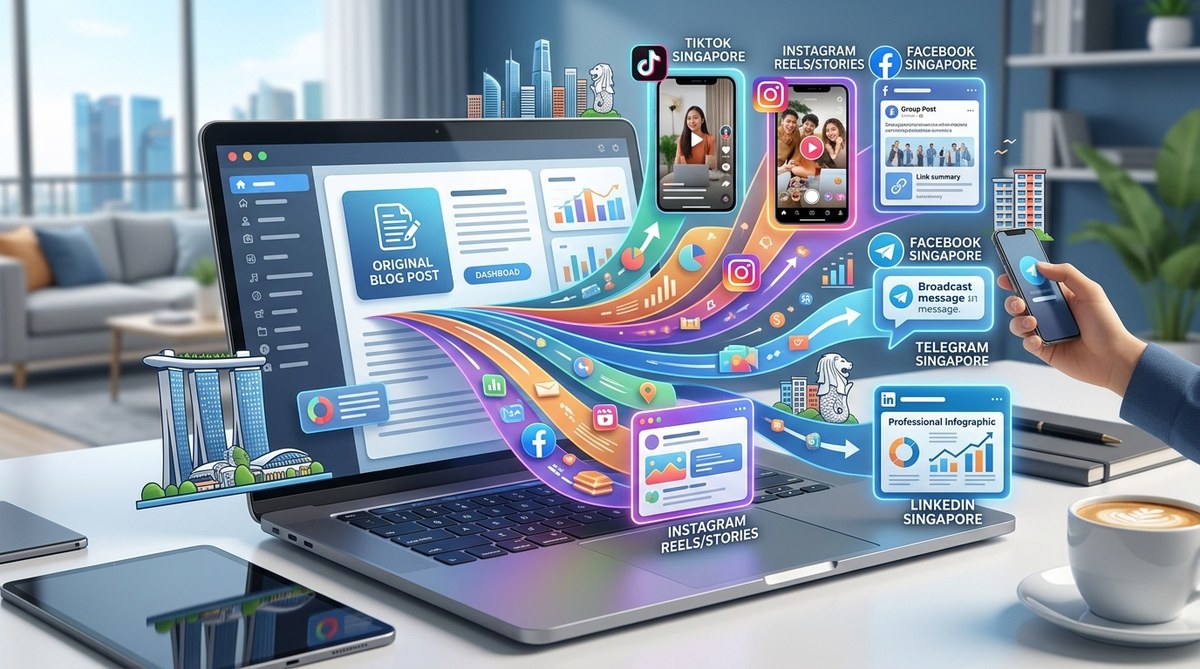
That single piece of content holds so much more potential. The trick is learning how to reshape it for different platforms where your Singapore audience already spends their time. Repurpose blog content Singapore readers find valuable, and you will multiply your reach without burning out.
Repurposing your blog content for Singapore social media platforms in 2026 is about working smarter, not harder. This guide walks you through a clear framework to turn one blog post into multiple social assets for Instagram, TikTok, LinkedIn, YouTube and more. You will save time, grow your presence, and keep your content calendar full without starting from scratch each week.
Why Repurposing Matters More in 2026
Social media in Singapore moves at a relentless pace. TikTok trends shift overnight. Instagram Reels demand constant attention. LinkedIn users expect fresh insights every few days. Keeping up by creating original content for each platform from zero is a recipe for burnout.
Repurposing lets you do the hard work once. You write one thorough blog post. Then you extract the best parts and reshape them for each channel. Your message stays consistent. Your voice stays recognisable. And you free up time to focus on other parts of your business.
Singapore audiences also appreciate content that feels local and timely. When you repurpose a blog post about a local topic like the latest CBD lunch spot or a new URA guideline, you can tailor each social version to the platform’s vibe. That gives you authenticity without extra research.
The Core Framework for Repurposing Blog Content
Start with a single blog post. Treat it as your source material. From there, follow these steps to create a full suite of social content.
-
Identify the key takeaways from your post. What are the three to five most important points? These become your core messages.
-
Match each takeaway to a platform format. A statistic works well as an Instagram graphic. A step by step process fits a TikTok or Reel. A personal insight suits a LinkedIn post.
-
Adapt the tone for each platform. Instagram Stories feel casual. LinkedIn posts carry more authority. TikTok expects energy and personality. Keep the message the same but adjust the delivery.
-
Create your assets in batches. Pull all the quotes, statistics, and tips from your post at once. Then schedule them across platforms over the coming weeks.
-
Track what performs best. Use native analytics on each platform to see which repurposed formats get the most engagement. Double down on what works.
Platform by Platform Tactics for Singapore Creators
Each social platform in Singapore has its own culture. Here is how to repurpose blog content for the most popular channels in 2026.
Instagram: From Blog Post to Carousel and Reels
Instagram remains a powerhouse for Singapore creators. Carousel posts work especially well for repurposing longer content.
- Turn your blog’s main argument into a 5 to 7 slide carousel.
- Use the first slide as a hook that shows the problem.
- Each subsequent slide covers one key point or data point.
- End with a call to action directing people to the full blog.
For Reels, pick one surprising fact or tip from your post. Film yourself explaining it in 30 to 60 seconds. Add captions because many viewers watch without sound during their MRT commute.
TikTok: Short Clips That Tease the Full Story
TikTok favours authenticity and speed. Your blog post becomes a series of short, punchy videos.
- Record yourself reading your most controversial or useful take.
- Show a simple visual like a list on a whiteboard.
- Use trending Singapore sounds to increase discoverability.
- End each video by asking viewers to read the full post via the link in your bio.
TikTok users in Singapore respond well to local references. Mention specific neighbourhoods, hawker centres, or MRT lines when relevant.
LinkedIn: Thought Leadership Snippets
LinkedIn is where professional audiences in Singapore look for insights. Your blog post can become a text based post about 200 to 400 words long.
- Open with a question or a bold statement from your blog.
- Share your main argument in two to three short paragraphs.
- Include a specific example or data point.
- Add a link to the full post in the comments rather than the main body.
LinkedIn users in Singapore value industry specific knowledge. If your blog covers marketing, finance, or tech trends for the local market, LinkedIn is your best bet.
YouTube: Expand Your Blog Into a Video Script
Do not just read your blog on camera. Instead, use the blog as a script outline.
- Expand on each section with more examples.
- Add visuals like screenshots, graphs, or b roll footage of Singapore locations.
- Keep videos between 5 and 15 minutes for the best retention.
- End with a call to subscribe and a link to the blog for more details.
Consider turning your blog into a YouTube Shorts series. Each short covers one tip from the post. That draws viewers to your channel and your website.
Twitter / X: Threads That Build Hype
Twitter threads are still a strong format for breaking down complex topics. Singapore’s Twitter community is active around news, memes, and local issues.
- Write a thread of 5 to 10 tweets based on your blog.
- Each tweet covers one point.
- Use the first tweet as a hook that stops the scroll.
- Add a link to the full blog in the last tweet.
Threads work well for list based posts like “5 Ways to Save on Groceries in Singapore” or “3 Lessons from the Latest Property cooling Measures.”
A Handy Reference Table for Repurposing Tactics
| Platform | Best Format From a Blog Post | Average Engagement Tip for Singapore in 2026 |
|---|---|---|
| Carousel or Reel | Use local landmarks in visuals | |
| TikTok | Short talking head clip | Add Singapore slang sparingly |
| Text post with a question | Tag relevant local companies | |
| YouTube | Long form video or Shorts | Include MRT station references |
| Twitter / X | Thread of 5 to 10 tweets | Post during lunch hour or 7 pm to 9 pm |
| Image with a long caption | Share in local interest groups | |
| Infographic or step by step pin | Use titles like “Singapore Guide to …” |
Common Mistakes When Repurposing Blog Content
Repurposing sounds simple. But many creators make avoidable errors that kill engagement.
Expert advice: The biggest mistake is copying and pasting the same text across platforms. Each platform has its own language. Treat repurposing as adaptation, not duplication. A LinkedIn audience wants depth. A TikTok audience wants speed. Give each what they expect.
Here are other pitfalls to watch out for:
- Ignoring platform culture. A formal blog tone feels stiff on TikTok. Loosen up.
- Repurposing everything identically. Change the format. Change the hook. Keep the core idea.
- Forgetting the call to action. Tell people what to do next. Read the blog. Follow your account. Share the post.
- Not scheduling in advance. Repurpose all your assets at once. Then schedule them over the month.
- Overlooking local context. A generic post about “budgeting tips” lands better if you mention Singtel bills or NTUC FairPrice.
Building a Repurposing Workflow That Sticks
A system saves you from decision fatigue. Here is a simple weekly workflow you can start using today.
- Monday: Write or publish your blog post.
- Tuesday: Extract all quotes, stats, and tips into a notes file.
- Wednesday: Create visual assets for Instagram and Pinterest.
- Thursday: Film TikTok and Reel versions of your top takeaway.
- Friday: Write a LinkedIn post and a Twitter thread.
- Saturday: Schedule everything for the following week.
Batch your creation work. Do all the filming in one session. Do all the graphic design in another. This reduces context switching and keeps your energy focused.
Tools That Make Repurposing Easier
You do not need an expensive suite of tools to repurpose well. Here are a few that save time without breaking the bank.
- Canva for carousels, infographics, and social graphics.
- CapCut for editing TikToks and Reels quickly.
- Descript for turning long form video or audio into text clips.
- ChatGPT or Claude for rewriting blog sections into platform specific tones.
- Later or Buffer for scheduling posts across platforms.
Pick one tool from each category and master it. That is enough to build a consistent repurposing habit.
How to Measure Success From Repurposing
You need to know if your efforts are working. Track these metrics each month.
- Click through rate from social platforms to your blog.
- Engagement rate per platform (likes, comments, shares divided by reach).
- Follower growth from repurposed content.
- Time saved compared to creating original content for each platform.
Set a simple goal. For example, aim to get 100 visits from Instagram to your blog each month. If you hit it, double down on that format. If not, tweak your approach.
To go deeper on how to structure your income around your content, read about how to maximise your Singapore blog income through strategic content planning. It pairs well with a solid repurposing routine.
Making Repurposing Feel Natural and Sustainable
The best repurposing strategy is the one you actually stick with. Start small. Pick one blog post this week and turn it into two social posts. See how it feels. Then scale up.
Singapore creators have an advantage. The local audience is highly engaged, mobile first, and active across multiple platforms. When you repurpose blog content Singapore style, you are meeting your audience where they already are. You are giving them value in the format they prefer. And you are doing it without working twice as hard.
Your Next Step to Build Momentum
Repurposing is not about cutting corners. It is about respecting your own time while giving your best ideas the widest possible reach. Your blog is a goldmine of insight. Every post holds the seed for a dozen social media updates.
Commit to repurposing one blog post per week for the next month. Use the framework and table above as your guide. After 30 days, check your analytics. You will likely see more traffic, more followers, and more engagement. And you will have built a habit that keeps your content engine running smoothly for the rest of 2026.
For more strategies tailored to the local market, check out how Singapore content creators can leverage local trends for maximum monetization in 2026. It will help you turn that repurposed content into actual revenue.
About the Author