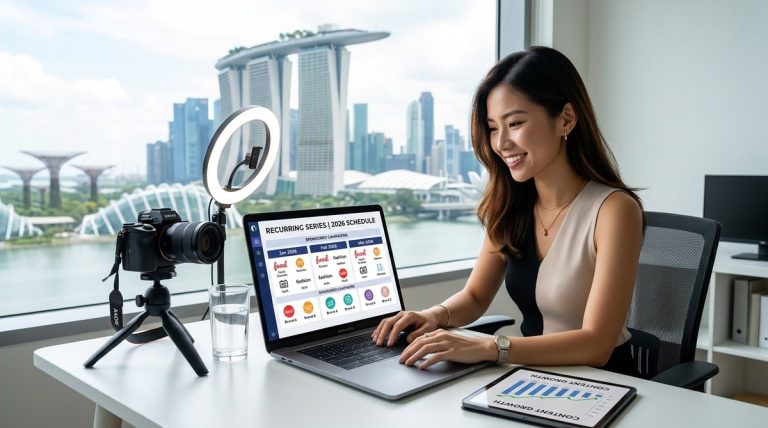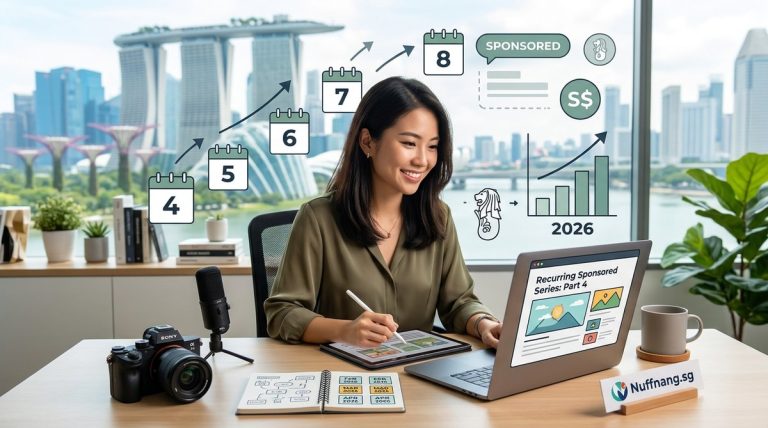
Your readers in Singapore can tell when a sponsored post is a one-off deal. They scroll past it. Brands notice that too. A recurring sponsored series changes the game. It gives your audience something to look forward to, and it gives brands a reason to keep coming back. In 2026, this approach is not just a nice to have. It is the smartest way to build a reliable income as a Singapore blogger.
A recurring sponsored series turns one-off brand deals into a predictable income stream. For Singapore bloggers, this means better compliance with local advertising rules, stronger audience trust, and higher rates. This guide shows you how to structure, pitch, and execute a series that works for your niche and your bottom line in 2026.
Why a one-off post no longer cuts it
Think about the last time you saw a random sponsored post for a product that the blogger never mentioned again. It felt disconnected, right? Singapore audiences are savvy. They value consistency. A single post might earn you a fee, but it does little for your long term relationship with either the brand or your readers.
A recurring series solves this. When you commit to a theme like “Monthly Hawker Centre Highlights” or “Sustainable Living Tips with [Brand Name]”, you create a narrative. Your audience starts to anticipate the next instalment. Brands see higher engagement because the content feels integrated, not intrusive.
The Singapore blogger sponsored content strategy for 2026 must prioritise depth over breadth. Brands here are moving away from spray and pray campaigns. They want partners who can tell a story over time.
How to structure a sponsored series that works
You cannot just promise a brand you will post three times and call it a series. You need a framework. Here is a numbered process to get it right.
-
Define the series arc. Every series needs a beginning, a middle, and an end. Even if it is ongoing, each instalment should have a mini arc. For example, if you are doing a “Home Office Makeover” series with a furniture brand, episode one could be planning, episode two is the reveal, and episode three is a one month update.
-
Align with your existing content pillars. Do not invent a new topic just for a brand. Look at what your audience already loves. If your travel blog already covers staycations, pitch a “SG Staycation Secrets” series sponsored by a hotel chain. It feels natural.
-
Set clear deliverables per instalment. Write down what the brand gets for each post. This includes blog content, social media posts, Stories, and any video elements. Be specific about length, format, and posting schedule.
-
Build in audience participation. A series thrives on interaction. Include a poll, a giveaway, or a Q&A segment. For example, “Vote on which neighbourhood I visit next” creates a feedback loop that keeps readers engaged between instalments.
-
Plan the renewal conversation. Before the series ends, prepare a performance report. Show the brand what worked. This makes the case for a second season much easier.
The compliance side that Singapore bloggers cannot ignore
Singapore has clear rules around sponsored content. The Advertising Standards Authority of Singapore (ASAS) and the Competition and Consumer Commission of Singapore (CCCS) expect transparency. A recurring series makes compliance simpler because you can set a standard disclosure format from day one.
Here is what you need to do:
- Use clear labels. Phrases like “Sponsored by [Brand]” or “Ad” at the start of your post are non negotiable.
- Apply the same disclosure to every instalment. Do not hide it in the middle of the text.
- Be honest about your relationship. If you received free products or payment, say so.
- Keep records. Save copies of your agreements and the final published content. This protects you if a question arises later.
A recurring series actually helps with compliance. When you work with a brand over multiple posts, you can agree on a standard disclosure line that runs across all content. This consistency builds trust with your readers and keeps you on the right side of the rules.
For more on managing your income correctly, read our guide on mastering the Singapore GST and tax implications for your blog income in 2026.
What to avoid when pitching a series
Many Singapore bloggers make the same mistakes when they first propose a recurring series. Here is a table that breaks down what to avoid and what to do instead.
| Common mistake | Why it hurts | Better approach |
|---|---|---|
| Pitching a vague idea | Brands cannot see the value. | Present a detailed content calendar with dates and topics. |
| Asking for a long commitment without proof | Brands want a test run first. | Suggest a 3 month pilot series with clear KPIs. |
| Ignoring the brand’s marketing goals | The series feels disconnected. | Align each instalment with a specific brand objective, like awareness or sales. |
| Overpromising on reach | You cannot guarantee viral results. | Focus on engagement rates and audience fit instead. |
| Not having a media kit ready | You look unprofessional. | Prepare a one page PDF that shows your past work and audience demographics. |
How to price a recurring series in 2026
Pricing a series is different from pricing a single post. You are offering predictability and a deeper partnership. That deserves a premium, but also a volume discount.
A simple formula to start with:
- Calculate your standard rate for a single sponsored post.
- Multiply that by the number of instalments.
- Apply a 10 to 20 percent discount for the commitment.
- Add a production fee if the series requires extra effort, like video editing or travel.
For example, if your single post rate is SGD 500 and you commit to six instalments, the base would be SGD 3,000. With a 15 percent series discount, you land at SGD 2,550. That is a fair deal for both sides.
But do not stop there. Include a clause for performance bonuses. If the series exceeds engagement benchmarks, the brand pays an additional fee. This aligns your incentives with theirs.
If you want to sharpen your pitching skills, check out our advice on how to write a brand pitch that Singapore companies actually read.
Tools and tactics to keep your series on track
Running a recurring series requires organisation. You cannot rely on memory alone. Here are the tools that help Singapore bloggers stay consistent.
- A content calendar tool like Trello or Notion. Map out every instalment with deadlines, draft links, and approval status.
- A contract template. Always have a written agreement that covers payment terms, cancellation policy, and usage rights.
- A performance dashboard. Use Google Analytics and native social media insights to track how each instalment performs. Share this with the brand monthly.
- A photo and video folder. Keep all brand assets organised by instalment number. This saves time when you need to repurpose content later.
“The bloggers who win recurring deals are the ones who treat their series like a mini media property. They plan it, they measure it, and they treat the brand like a true partner.” – Nuffnang Singapore team
How to repurpose your series for maximum value
One of the hidden benefits of a recurring series is the content you can create around it. Do not let each instalment sit alone. Repurpose it across your channels.
- Turn each blog post into a carousel for Instagram.
- Create a short Reel showing behind the scenes of the shoot.
- Compile the series into a PDF guide that you can offer as a lead magnet.
- Use quotes from the series for LinkedIn posts.
This approach multiplies the value of the brand partnership without extra work from the brand. It also shows the brand that you are maximising their investment.
For more ideas on recycling your content, see how to repurpose your blog content for Singapore social media platforms in 2026.
Making your series stand out in a crowded market
Singapore has a vibrant blogging scene. Your series needs a unique angle. Here are some directions that work well in 2026.
- Local discovery. Focus on places or experiences that your audience has not seen before. Think hidden cafes in HDB estates or lesser known hiking trails.
- Skill building. Teach your audience something over a few instalments. For example, a “Budget Interior Styling” series with a home decor brand.
- Real talk. Address a common pain point. A finance blogger could do a “Debt Free Journey” series with a financial planning app.
- Seasonal tie ins. Align your series with Singapore events like the Great Singapore Sale, National Day, or the year end school holidays.
The key is to pick an angle that feels authentic to your voice. If you force a topic that does not fit, your audience will sense it.
To understand which niches are performing best, read our analysis on why Singapore influencers should focus on niche audiences for higher engagement.
Building a portfolio of series for long term stability
Once you have run one successful series, do not stop there. Build a portfolio. Approach different brands in complementary categories. For example, a lifestyle blogger could have:
- A quarterly “Wardrobe Refresh” series with a local fashion label.
- A bi monthly “Meal Prep Sunday” series with a grocery delivery service.
- A monthly “Self Care Sunday” series with a skincare brand.
Each series targets a different audience need. Together, they create a diversified income stream. If one brand pauses their budget, the others keep you afloat.
This is the core of a sustainable Singapore blogger sponsored content strategy. It is not about chasing the next single deal. It is about building recurring relationships that support your business month after month.
Your next step to start a sponsored series
You do not need a huge following to start. You need a clear idea and the confidence to pitch it. Begin by looking at your most popular content from the last six months. Identify a theme that appears naturally. Then draft a one page proposal for a brand that fits that theme.
Keep the proposal simple. State the series name, the number of instalments, what each one covers, and the expected outcomes. Attach examples of your best work. Send it to the brand’s marketing team or reach out through a platform like Nuffnang.
If you need more inspiration on how to structure your offer, our guide on how to build a recurring sponsored series that Singapore brands actually want to fund in 2026 walks you through the exact template.
The shift from one off posts to recurring series is the most important move you can make for your blog income this year. Start small. Prove the concept. Then scale it.
Your audience and your bank account will thank you.
About the Author