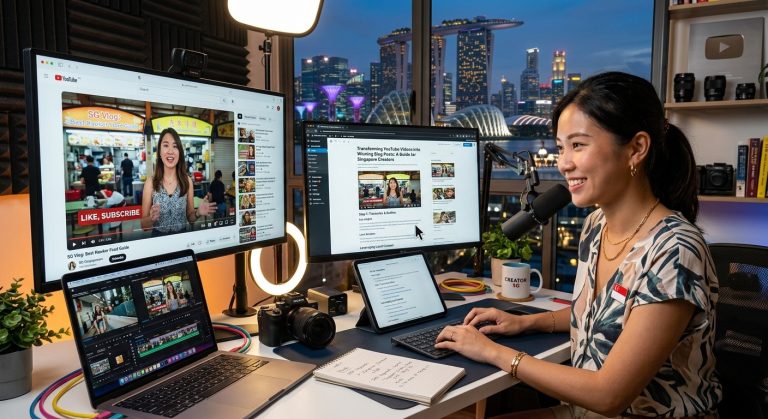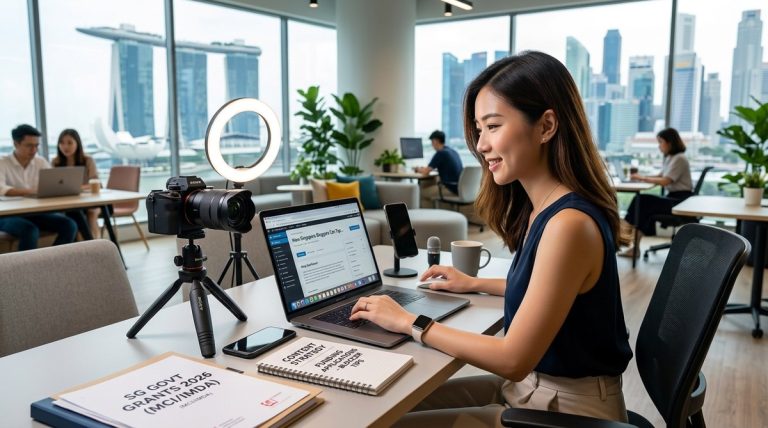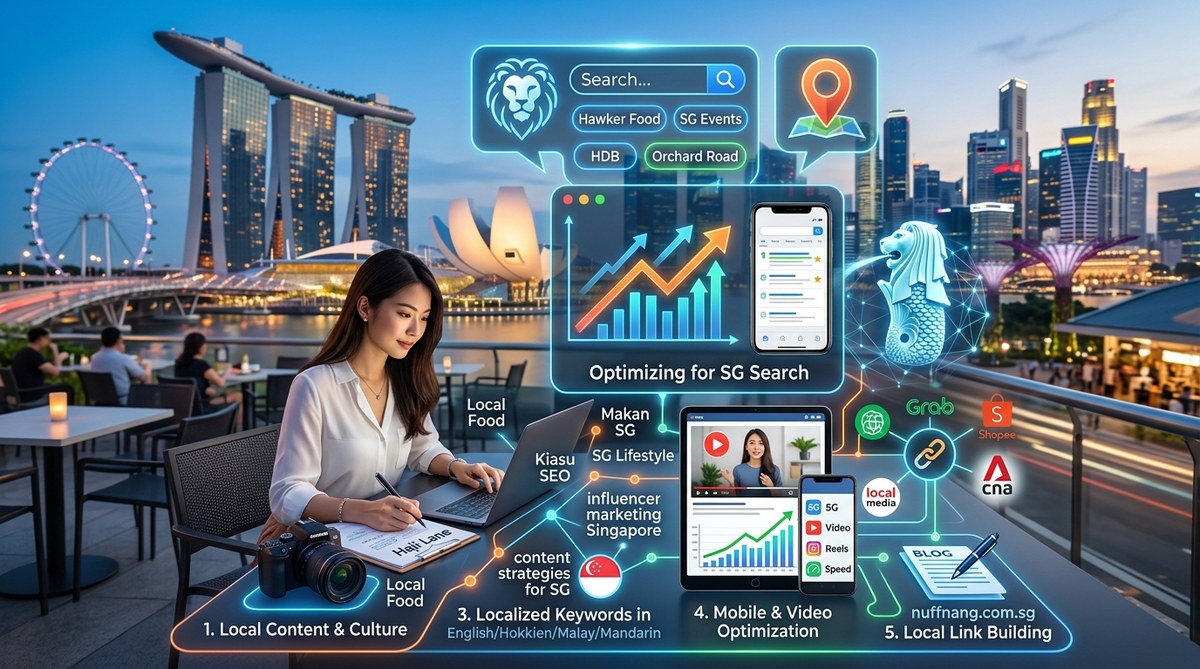
If you blog about the best chicken rice in Jalan Besar or the latest fashion trends at Bugis Street, your content competes with thousands of other Singapore voices. But here is the truth: general SEO advice from the US or UK often falls flat here. Your audience searches differently. They type “nearest MRT to …” or “where to buy durian cake in Singapore” instead of generic phrases. That is why you need Singapore-specific SEO strategies for blog traffic in 2026.
Search engines now prioritise local relevance and user intent more than ever. For a Singapore-based blogger, understanding how to capture the local search landscape is the single biggest lever for sustainable growth. Let’s break down five proven strategies that will help your blog rank higher, attract the right readers, and keep them coming back.
Singapore SEO in 2026 is about speaking the same language as your local audience. Focus on neighbourhood keywords, local events, Singlish phrasing, and mobile-first content. Avoid generic topics. Pair strong local optimisation with high quality, helpful writing. This approach helps your blog stand out in a crowded market and drives traffic that actually converts into loyal readers and brand partners.
Start with Neighbourhood Keyword Research
Keyword research is the foundation, but in Singapore you need to zoom right down to the district level. A reader searching for “best durian stall” could be from Ang Mo Kio or Jurong East. If your content targets only “best durian stall in Singapore”, you miss the chance to rank for “best durian stall Ang Mo Kio” or “durian delivery Punggol”.
Here is a simple process to find high value local keywords:
- Open Google Keyword Planner or a free tool like Ubersuggest.
- Add a base keyword like “study room rental” or “affordable yoga classes”.
- Append Singapore neighbourhoods: “Tampines”, “Clementi”, “Woodlands”.
- Look for long tail queries that combine location and intent. Example: “kid friendly cafe near East Coast Park”.
- Check Google Trends for Singapore and filter by subregion to spot rising phrases.
- Shortlist 5 to 10 keywords per article that have decent search volume (50+ searches per month) and low competition.
Many bloggers skip this step and write about “how to save money on groceries” without mentioning NTUC or Sheng Siong. A Singapore centred keyword strategy gives your content a distinct edge.
Optimise for Local Search Intent
Search intent in Singapore can be very different from other countries. A phrase like “taxi fare” might be a comparison query in Europe, but in Singapore it could be a lead up to “how to use Grab” or “ComfortDelGro surcharge”. You need to match the intent.
- Informational: “How to apply for GST Voucher 2026” – answer step by step.
- Transactional: “Buy artisan bread delivery Singapore” – include links to shops or contact details.
- Navigational: “Takashimaya opening hours” – write a clear guide with maps.
When you write, imagine you are helping a friend in a specific situation. For example: “You just moved to Paya Lebar and need a reliable plumber? Here is what to search and how to avoid overcharging.” That kind of local, conversational tone aligns perfectly with what Singaporeans actually type into Google.
“Singaporeans prefer short, direct answers. If your blog can tell them the best way to get from Bedok to Raffles Place during peak hour, you’ve already earned their trust.” — local SEO consultant, Aysha Rahman
Use Local Structured Data and Map Schema
Technical SEO matters, especially for blogs that review shops, services, or events. By adding structured data (Schema) specific to your location, you help Google understand your content’s relevance. For example, if you run a Singapore food blog, use the LocalBusiness schema to show your review’s location rating. Even if you do not own a business, you can use “Article” schema with a “contentLocation” property.
A common mistake is forgetting to update the map marker or using a generic organisation schema. Instead, do this:
- Add
GeoCoordinatesto highlight the place you are writing about (e.g., a cafe at Holland Village). - Use
Eventschema for any community events or launches you cover. - Verify your blog on Google Business Profile if you have a real address or if you collaborate with local brands.
According to recent data, pages with proper local schema get 20 to 30 percent more clicks from Singapore search results because the rich snippet shows a map and directions.
Build Links Within the Singapore Creator Community
Backlinks from local websites tell Google that your blog belongs to the Singapore ecosystem. Instead of chasing generic link farms, focus on partnerships with other local bloggers, directories, and media outlets.
- Submit guest posts to Singapore based blogs like TheSmartLocal, Ladyironcheese, or Little Day Out.
- Join local blogger groups on Facebook or Telegram and share each other’s posts.
- Submit your blog to Singapore specific directories such as Blogger Singapore or Singapore Blog Directory.
- Write about Singapore events (Artbox, Singapore Night Festival) and get mentioned by event organisers.
Every relevant local link reinforces your authority for Singapore search terms. Never buy links or use automated comment spam. One high quality link from a trusted Singapore domain is worth more than fifty spammy ones.
A good way to start is by reading Maximise Your Singapore Blog Income Through Strategic Content Planning – it covers how to structure content that attracts both readers and link opportunities.
Refresh Old Content with Local Updates
You probably have posts from 2023 that cover popular topics like “best bubble tea in Singapore” or “study spots near NUS”. Those articles can still drive traffic if you update them for 2026. Search engines favour fresh content, especially local content where information changes quickly – shop closures, new MRT stations, updated opening hours.
Here is what to update:
- Prices and promotions (e.g., “4G plans 2026” instead of “2024”).
- Location details – check if the address or MRT line is still accurate.
- Add recent photos taken in 2026 to improve user engagement.
- Replace outdated screenshots or quotes.
After refreshing, resubmit the page to Google Search Console for reindexing. Many bloggers see a 40 percent lift in traffic just by bringing their best posts up to date.
To plan your refreshes systematically, check out the guide on Effective Strategies for Growing Your Singapore-Based Content Audience. It includes a calendar approach for revisiting old content.
Common Mistakes to Avoid
Even experienced bloggers fall into traps that hurt their local SEO. Here is a table of what not to do, and what to do instead.
| Mistake | Why It Hurts | Better Approach |
|---|---|---|
| Using generic keywords like “cheap flights” without Singapore context | Low competition but also low relevance | Target “cheap flights from Changi Airport to Bali 2026” |
| Writing in generic English without local phrasing | Readers find it impersonal | Use terms like “tapao”, “kopi”, “MRT breakdown” naturally |
| Focusing only on desktop design | Majority of Singapore searches are mobile | Use responsive design and test on local mobile networks |
| Neglecting to optimise for voice search | Many Singaporeans use voice assistants | Write questions: “Where is the nearest 24 hour clinic?” |
| Ignoring local events calendar | Miss seasonal traffic spikes | Cover Great Singapore Sale, National Day, Singapore Grand Prix |
Final Thought: Turn Local Knowledge into Traffic
The biggest advantage you have as a Singapore blogger is that you live and breathe the local culture. No AI tool can replicate the experience of standing in line for laksa at 11am or knowing which bus stop to get off at to reach a hidden café. Use that knowledge in your SEO strategy.
Make your content feel like a conversation at a kopitiam. Write headlines that sound like a friend recommending something. Include the exact steps a Singaporean would take. When you do that, Google picks up on the authenticity and rewards you with rankings.
Now go update one old post or write one new neighbourhood focused article this week. Small consistent moves build into a steady stream of organic traffic. If you want more ideas on turning that traffic into income, read Maximising Your Revenue as a Singaporean Content Creator in 2026. Your next loyal reader is just one local search away.
About the Author